
Four faculty members from Nagaland University have been named among the world's top 2 per cent scientists for their significant research contributions, according to an annual database by Elsevier and Stanford University. Three of them also feature in the Career-Long Top 2 per cent Scientists list, highlighting the university's growing global research impact across various scientific disciplines.

Researchers have discovered a method to externally manipulate a cell's automatic waste clearance process, known as autophagy. This breakthrough, involving the protein LC3, could offer new therapeutic targets for diseases like cancer and Parkinson's, where cellular cleansing mechanisms are often impaired.

A 65-year-old retired scientist, Sanjay Kadam, died after suffering a cardiac arrest during the Satara Hill Half Marathon. Despite immediate CPR and medical intervention, including an angioplasty, he succumbed to a second massive cardiac attack hours later. Organisers highlighted their medical preparedness, including medical ID tags and deployed emergency teams.

OpenAI's chief scientist, Jakub Pachocki, has issued a stark warning about the accelerating pace of artificial intelligence, stating that "no one is prepared" for its rapid rise and potential consequences. He highlights concerns over autonomous AI agents taking unintended actions and calls for international coordination, voluntary slowdowns, and robust safety measures to ensure human control and alignment with human values as machine intelligence surpasses human capabilities.
The University of Melbourne and the Indian Institute of Science Education and Research (IISER) Tirupati have launched a new 2+2 Bachelor of Science Integrated (Honours) dual degree. This programme offers Indian students a globally connected, research-intensive science education, allowing them to study two years at IISER-Tirupati and two years in Melbourne, graduating with two honours degrees.

Following astronaut Shubhanshu Shukla's historic visit to the International Space Station, a significant surge in interest for space science careers is observed among Indian students. Srimathy Kesan of Space Kidz India highlights this shift from traditional fields like engineering and medicine, while Nobel laureate Didier Queloz emphasises the crucial role of curious young scientists in shaping the future.

Delhi Police have arrested 11 individuals involved in multiple "digital-arrest" scams, recovering over Rs 12 crore. The scams, linked to handlers in Southeast Asia, have affected 78 complainants nationwide, totaling Rs 73 crore. A retired scientist was defrauded of Rs 1.25 crore, with the entire amount frozen. The investigation uncovered a network arranging mule bank accounts and using cryptocurrency for commissions.
Britain's AI Minister, Kanishka Narayan, issued a strong warning on Monday about the growing risks posed by artificial intelligence to cyber defences. He highlighted the potential for serious consequences from autonomous AI systems and announced new government measures, including a 'National Cyber Action Plan', to bolster the UK's resilience against cyber-attacks.
A collaborative study by Indian and South Korean scientists has provided new genetic, anatomical, and ecological insights into the wide-ridged Indo-Pacific finless porpoise. The research, based on a stranded specimen in Kerala, revealed distinct genetic differences from Pacific populations and highlighted significant conservation challenges, including limited protected habitats and anthropogenic pressures.

Scientists at the ICAR-CMFRI have identified a new species of deep-sea fish, named Cyttopsis indica (Indian dory), in the Arabian Sea off the Kerala coast. This discovery, based on specimens collected from the eastern Lakshadweep Sea, corrects a long-standing taxonomic misidentification and highlights the rich marine biodiversity of India's southwest coast.

'It is to observe the Sun continuously that you have the Aditya L1 mission.' 'It is in a position from where it can observe the Sun continuously.'
Atomic Energy Commission chairman Ajit Kumar Mohanty stated that India is on the verge of a significant technological transformation, driven by advancements in AI, quantum technologies, and other fields. Speaking at BIT Mesra's convocation, he emphasised the need for strong indigenous capabilities, skilled professionals, and interdisciplinary collaboration to achieve a developed India. Other speakers, including BIT Mesra's Chancellor and Vice Chancellor, echoed the importance of continuous learning and contributing to national progress.
A new study analysing over 33,000 cancer journal articles has uncovered widespread citation manipulation by "research paper mills". These fraudulent organisations artificially inflate citation counts, a key academic performance metric, for thousands of articles. The suspect papers show unusually high citations but low readership, distorting scientific evidence and potentially slowing progress.
A new study based on satellite observations of a brown dwarf orbiting a star suggests the possible first detection of an exomoon. Researchers are debating its classification as an 'exoplanet' or 'exomoon' due to a lack of definitive systems, but refer to it as an 'exosatellite' with a mass similar to Jupiter.
The Sports Ministry has revised its Scheme of Assistance to National Sports Federations (ANSF), significantly increasing financial support for organising international events in India, with up to Rs 50 crore available. The new guidelines also maintain funding for National Championships, introduce assistance for National Games, and outline plans for Olympic Training Centres, aligning with India's 2036 Olympic bid and 2030 Commonwealth Games aspirations.
Hindustan Copper Limited CMD Anupam Misra spoke at the 85th CSIR Foundation Day, advocating for workplace safety, employee welfare, and scientific excellence. He stressed the importance of continuous learning, innovation, and bridging research with industrial applications to support Viksit Bharat 2047. CSIR-NML Director Dr. Sandip Ghosh Chowdhury also highlighted CSIR's legacy and its role in India's technological self-reliance.

'IN-SPACe like an octopus is stretching its tentacles everywhere and choking ISRO.'
Researchers have found that Earth and Mars formed in different ways despite originating from the same solar nebula. Earth's mass primarily came from protoplanets accreting pebbles, while Mars's mass largely originated from planetesimals. This study, published in Nature Astronomy, used volatile elements as chemical fingerprints to reconstruct their formation 4.5 billion years ago, supporting a hybrid model of planet formation.

Climate scientist Tapio Schneider advocates for expanding early warning systems beyond rainfall events to include other disaster triggers like flash floods, citing the recent Nepal floods. He highlights the inevitability of 1.5 degrees Celsius global warming and discusses the role of advanced climate modelling and AI in improving predictions and research, particularly for regions like India.
Cisco Chairman and CEO Chuck Robbins stated that attempts to slow down AI development are futile. He emphasised that the primary focus should be on enhancing security and defensive measures to match AI's rapid advancement. Robbins also discussed the need for guardrails in AI model releases, the importance of cyber hygiene, and the balancing act between innovation and regulation, particularly for countries like India. He believes AI will not be a net job disruptor but will move people up the value chain.
Researchers have developed a new atomic clock using the element lutetium, which they claim is the most stable and accurate in the world. This clock can measure a trillionth of a second precisely and is highly resilient to environmental changes like temperature and magnetic fields, making it a significant advancement in timekeeping technology.

A five-year-old girl was kidnapped and found murdered in a Hyderabad gated community. Police suspect a recently dismissed security guard, Vikram, who allegedly demanded a Rs 20 lakh ransom from the girl's family. The girl's body was discovered in a clubhouse cellar with her hands and legs tied. Police are actively searching for the absconding suspect.
Women Inspiring Network (WIN) has launched 'WIN Connect', an AI-powered platform designed to connect global women leaders and enhance opportunities across various sectors. Unveiled in New York, the platform aims to leverage AI to facilitate networking, access to capital, and business growth for its 10,000-strong network across 50 countries.

Karl Deisseroth, Peter Hegemann, and Georg Nagel have been jointly awarded the 2026 Nobel Prize in Physiology or Medicine for their groundbreaking discoveries in light-gated ion channels and optogenetics, a method revolutionising the study of brain function.
Prof Rajeev Ahuja, Director of IIT Ropar, has been awarded the National Systems Gold Medal by the Systems Society of India. This prestigious award has previously been conferred upon eminent scientists like Dr A P J Abdul Kalam and Dr K Sivan, recognising significant contributions to Systems Science and Engineering.
Scientists are stunned by the discovery of a nine-million-year-old capybara tooth fossil in Chile's Atacama Desert, a region currently devoid of capybaras. This finding not only marks the oldest record of the semi-aquatic rodent in coastal Chile but also significantly challenges the long-standing scientific view that the Atacama Desert has been continuously dry for 40 million years, suggesting a much wetter past.

ISRO has issued an Announcement of Opportunity, inviting Indian scientists and researchers to submit proposals for accessing data from its XPoSat Mission. Launched in January 2024, XPoSat is India's first satellite dedicated to X-ray polarimetry measurements, designed to study extreme astronomical X-ray sources like black holes and neutron stars, thereby enhancing understanding of celestial emissions.

'You cannot stop these models from getting better. There is competitive and business pressure and if the US stops then maybe China will go ahead.'
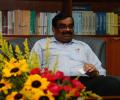
A recent study by IIT Kharagpur researchers reveals that powerful cyclones can significantly impact groundwater quality up to 100 metres below the surface in deep coastal aquifers. Conducted in the climate-vulnerable Sundarbans region, the research highlights how extreme weather events disturb the freshwater-seawater balance, threatening drinking water security and necessitating depth-specific groundwater management strategies.
A new study from Stanford University suggests the human brain may have evolved as two independent organs, challenging the long-held belief of a single progenitor cell. Researchers found two parallel nervous systems developing without intersection, which could explain difficulties in growing hindbrain neurons in labs and open new avenues for treating neurological diseases.
Researchers have for the first time directly visualised how two DNA molecules, despite their identical negative charges, zip together. This breakthrough, achieved using high-powered atomic force microscopy and advanced simulations, confirms the 'DNA zipper' model, revealing that positively charged metal ions act as molecular bridges to facilitate this crucial biological process. The discovery has significant implications for understanding genetic recombination, gene silencing, chromosome packaging, cancer development, and future biotechnology.
Researchers have identified two new species of microscopic snails, Georissa meghalayaensis and Acmella bensoni, in the limestone caves of Meghalaya, India. This discovery highlights the rich, yet underexplored, biodiversity of the region's subterranean ecosystems, while also raising concerns about threats from increasing tourism and mining activities.
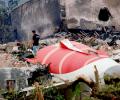
A year after the devastating AI-171 Dreamliner crash near Ahmedabad, forensic scientists recount the immense emotional and scientific challenges faced in identifying the 260 victims. The director of Gujarat Directorate of Forensic Sciences, H P Sanghvi, shared the indelible image of a severed hand, symbolising the terror and the team's dedication.
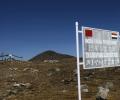
Scientists have discovered a rare leafless orchid species, Gastrodia keyiensis, in a remote gorge along the Keyi River in Arunachal Pradesh. This elusive orchid, which lacks leaves and chlorophyll, relies on soil fungi for nutrients and was found at an altitude of around 1,000 metres. The discovery highlights the rich biodiversity of Arunachal Pradesh and the need for conservation.

Ahead of Gandhi Jayanti, People for the Ethical Treatment of Animals India (PETA India) has sent a letter to Union Minister for Information and Broadcasting Ashwini Vaishnaw calling for a nationwide prohibition on billboards, television, online and other advertisements for meat, beginning on October 2.
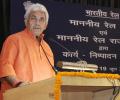
Jammu and Kashmir LG Manoj Sinha addressed the 'IMMUNOCON-2026' conference, stressing the importance of translating scientific immunological knowledge into public health action. He urged scientists to focus on precision medicine, immuno-AI fusion, climate immunity, and accelerating translational research to combat infectious diseases and enhance healthcare delivery.

India's ruling Bharatiya Janata Party (BJP) is actively courting Sri Lanka's Janatha Vimukthi Peramuna (JVP), a Marxist party with strong Sinhalese nationalist roots, marking a significant shift in bilateral relations despite ideological differences. This engagement, highlighted by a recent high-profile visit by JVP leader Tilvin Silva, aims to foster cooperation on economic projects and address New Delhi's concerns over slow progress in India-aided initiatives in the island nation.

'Hydro-seismicity is a phenomenon that typically shows up during and just after the monsoon.' 'Heavy rain causes water to percolate deep into the rock, and where there are fractures, that water fills the pores and builds up what we call pore water pressure.' 'That pressure can widen existing cracks, and eventually the rock gives way -- which surfaces as tremors.'
Researchers at IIT Kharagpur, in collaboration with the University of Illinois Urbana-Champaign, have developed a highly sensitive sensor technology. This innovation allows ordinary smartphone cameras to detect extremely tiny, invisible objects, potentially leading to low-cost, portable medical testing and other applications requiring the detection of minute substances.

A recent study by scientists indicates that the Hindu Kush-Himalaya region is experiencing increased frequency and intensity of extreme weather events due to climate change, including rapid glacial melting and changing rainfall patterns. However, the research also cautions against solely blaming climate change, highlighting that human factors like population growth, commercial activities, and non-enforcement of regulations contribute significantly to the vulnerability and impact of these disasters. The study points out that many devastating floods originate from small glaciers and rain-fed streams, exacerbated by encroachment on unstable slopes and floodplains.
